
APLV: Home-Grown Leadership
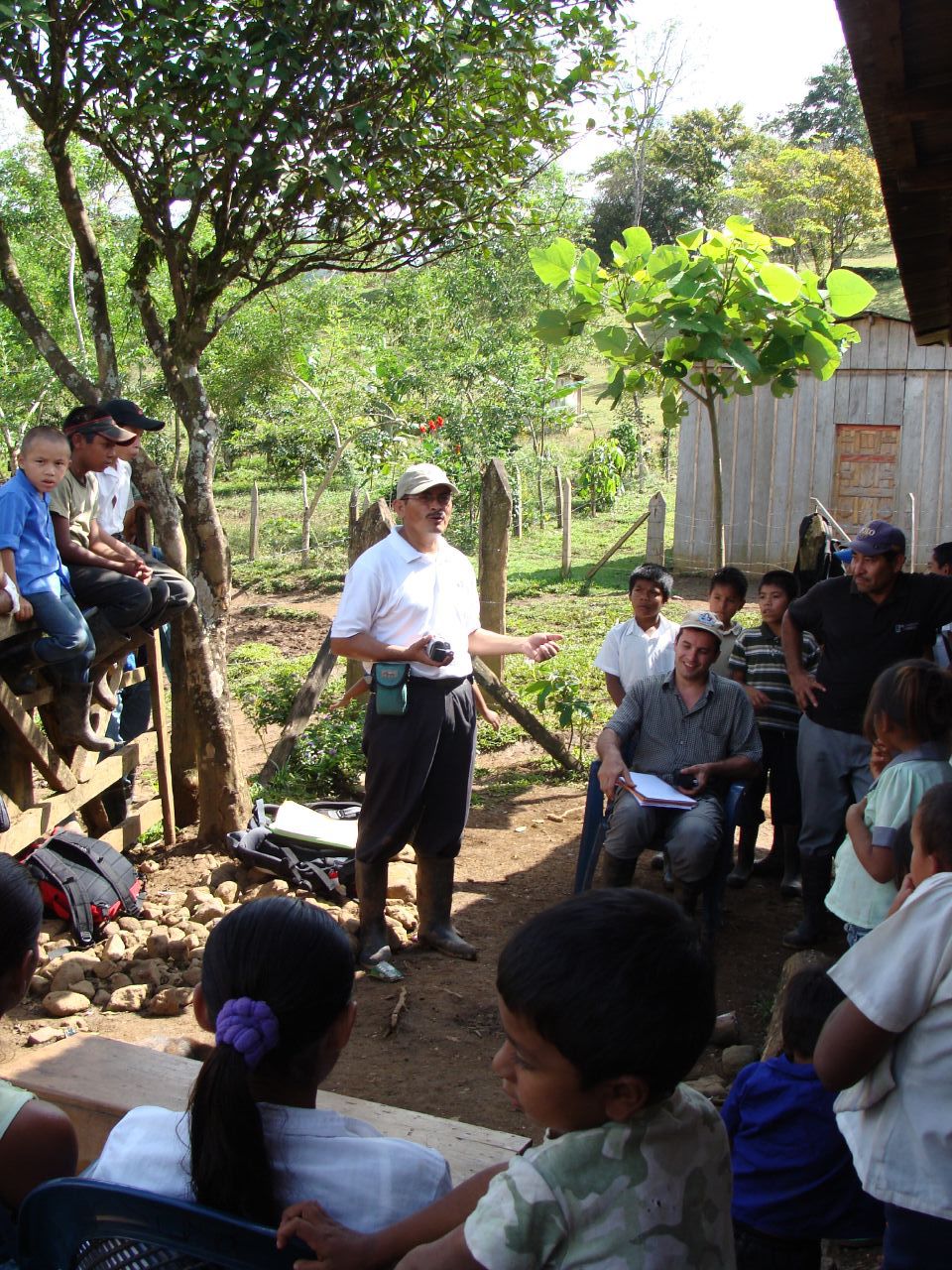
Esteban Cantillano is one of the amazing success stories of APLV. In 1993 he was a campesino living in a little, remote village where APLV was developing a potable water project. He was elected the coordinator by the community, so was responsible for all the interface with the community. But he asked a pile of questions of the brigade from UC Berkeley that was putting in the system! He wanted to know about everything. He was eventually invited to join the first class of the "Potable Water Technical School", a technical high school program, but protested that he had only finished the 6th grade. They said "well, try it out - we'll take you on probation." That was in 1993. Needless to say, he finished with honors (and later went back and did his 7th-10th grade education!) and became one of the pillars of APLV. He has served in the technical/design role he was trained for, as the social coordinator (who does the contact with the village, local government, landowners, and the like), and is now in charge of the office here in Rio Blanco. He seems to know everybody, and to know everything about every project ever constructed by APLV.
Esteban is just one example of the depth of leadership that we've found here. All but one of the workers here is Nicaraguan, and they have a combined total of decades of experience with the organization. read more here... lee mas aquí... »
Agua Para La Vida: We're in Rio Blanco, Nicaragua
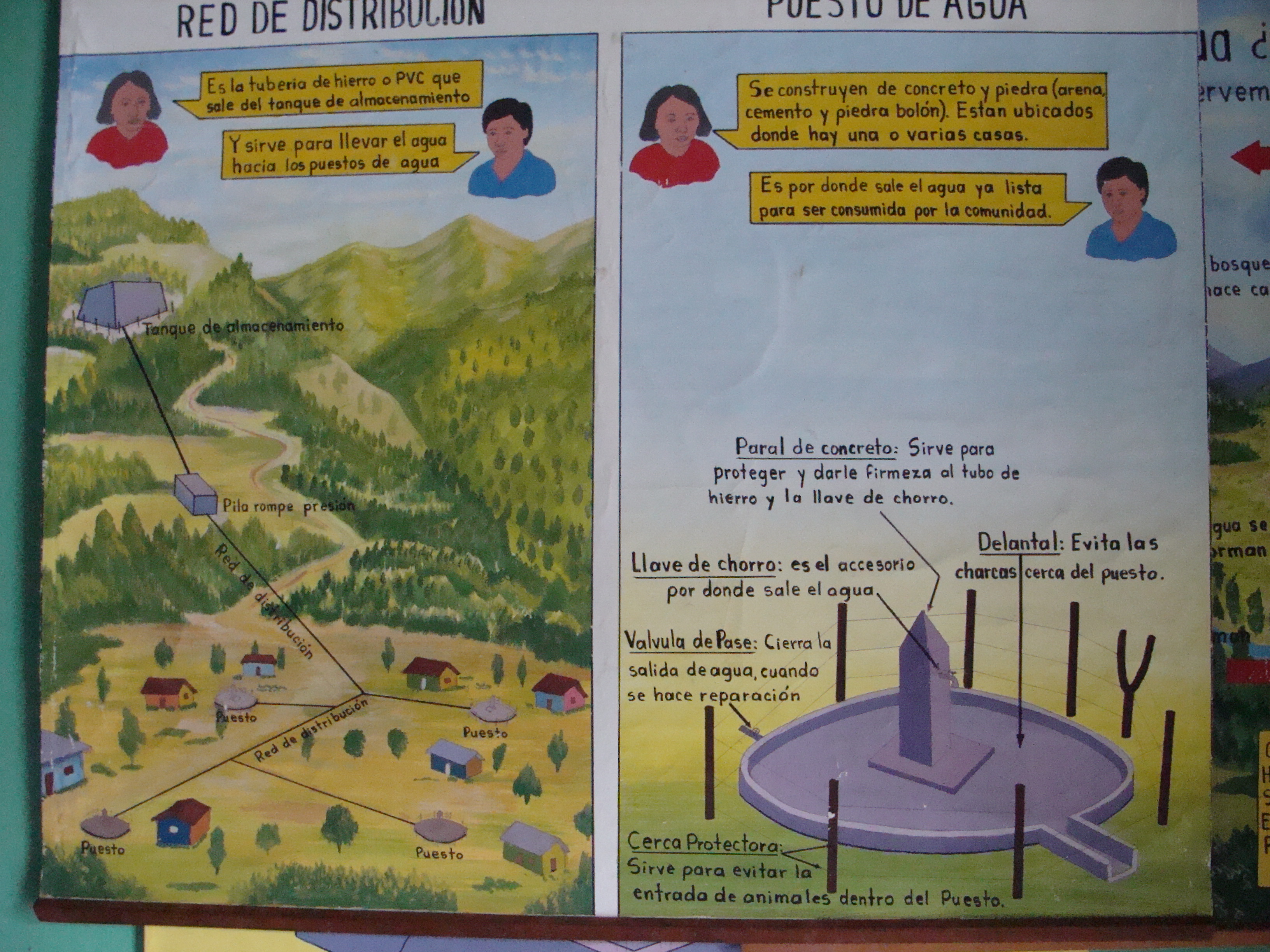
Last Tuesday we rode into Rio Blanco, in the rural, rural lowlands of Nicaragua, to visit an organization we'd been in contact with for a few years, so we'll be in Rio Blanco for a week or so. Agua Para La Vida (Spanish for "Water for Life") was founded 19 years ago toward the end of the dark war years when a CU Berkeley engineering professor came to this out-of-the way place for a visit with another charitable organization and found that there was no potable water at all in the village he was visiting. Being an engineer, he thought in terms of how to solve their problem with some water engineering, and he brought volunteers to the village over a period of a couple of years to put in a water system, complete with collection at the water source (a spring) and piping to distribution points. From that time to now APLV has grown into a modest but effective little organization, having completed more than 50 projects in the little villages mostly in the Rio Blanco area.
APLV has an integrated approach to water: They don't want to just deliver a water project, because without the other aspects of healthy living it doesn't do much, and won't be cared for properly anyway. They work with the community to make sure that each household member gets trained in a variety of health management techniques, including handwashing, proper storage and handling of drinking water, trash management, and the like. read more here... lee mas aquí... »
The saint of San Rafael
On the struggle out of the valley of San Marcos, a truck stopped and offered us a lift. It was driven by an Italian Catholic priest in traditional robes and two sisters with similar brown habits. They smiled so nicely as they told me about their lovely town of San Rafael and their special church. They encouraged me to visit San Rafael which I did the next day.
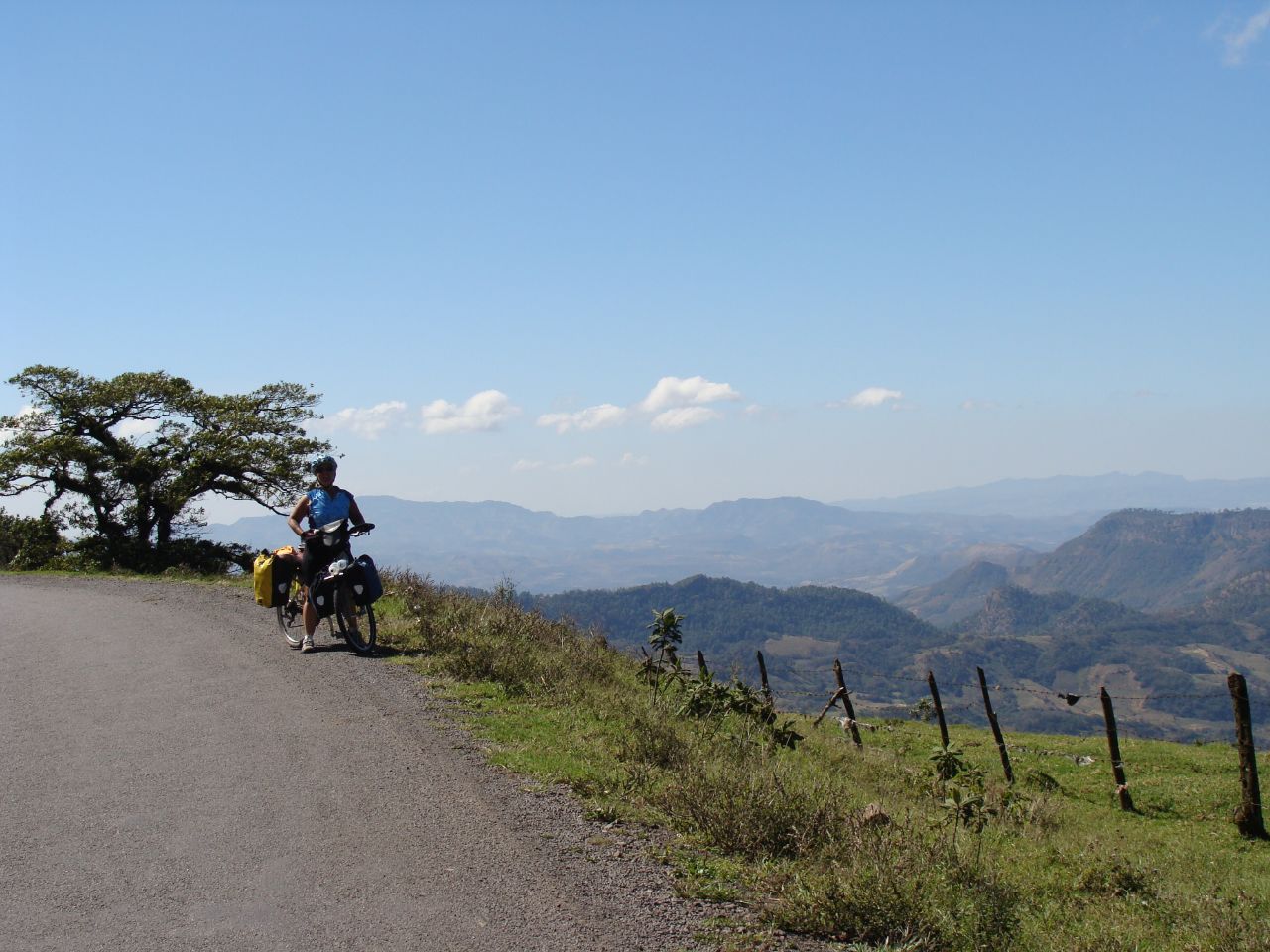
I took a bus out to San Rafael and did agree that is was a wonderful village. I got a private tour of Tepeac by the groundskeeper who had great love for this special place. According to an article published in the Nica News 21 (March 1999) “The most outstanding figure in the history of San Rafael is the Italian priest, Father Odorico D'Andrea. From his arrival in 1953 to his death in 1996, Father Odorico achieved virtual sainthood among the people of San Rafael and the surrounding communities. His image, a smiling, warm, obviously kind man in plain brown robes, can be seen in nearly every home, business and vehicle in the town. "It's so sad," said one community member, "that you weren't here to know him." Among his achievements are a formidable health clinic, a library, several neighborhoods for the poor, and the beautifying of the church.
The latter feat is truly impressive. Pastel-colored windows admit a calming light in which to view the many bright murals, bas-reliefs and shrines. read more here... lee mas aquí... »
The ride from San Marcos to Jinotega
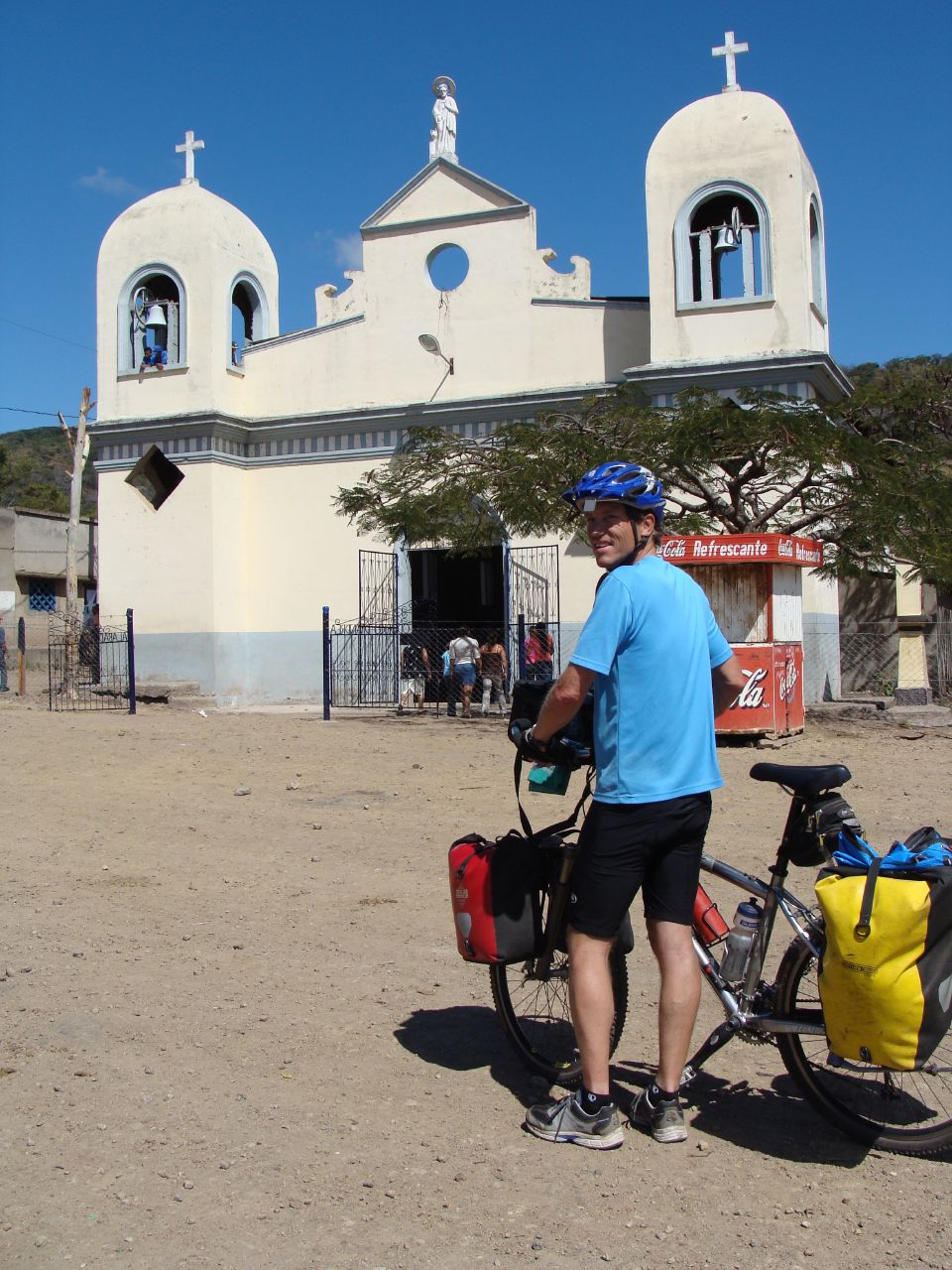
Let me take a moment and tell you about one of the villages we rode through on the way from Estelí to Jinotega, Nicaragua this week. San Marcos is a strange little village where everything has been built around a lone church. The houses in the village form a huge empty dirt circular void around the church with nothing in between. It reminded me of an old ghost town but there was people in front of every house, just sitting and watching the strange gringos ride through their village.
It was around high noon as we rode in. In the bell tower were two young boys ringing the church bell, calling to everyone that the funeral service was about to begin. The only restaurant closed up just seconds before we rode up (probably because of the funeral). Everyone was strolling toward the church and those that were not just sat and stared at us, hungry we rode on to another part of the village that had promise for lunch time nourishment and knowing that we had some hard climbs ahead. With just a small printed sign above a door, I stopped to ask where we could find something to eat. An older man rushed off to find his aging wife. Bingo, there was some food on the stove which they would gladly serve us. We still do not know if this was an official place that served food but they did for us. They were first concerned that we would not like the food they had to offer- beans, squash cooked in the beans and corn tortillas and some kind of milky fruit like drink. We assured them we eat everything, several times. read more here... lee mas aquí... »
The Valley near San Marcos outside of Esteli
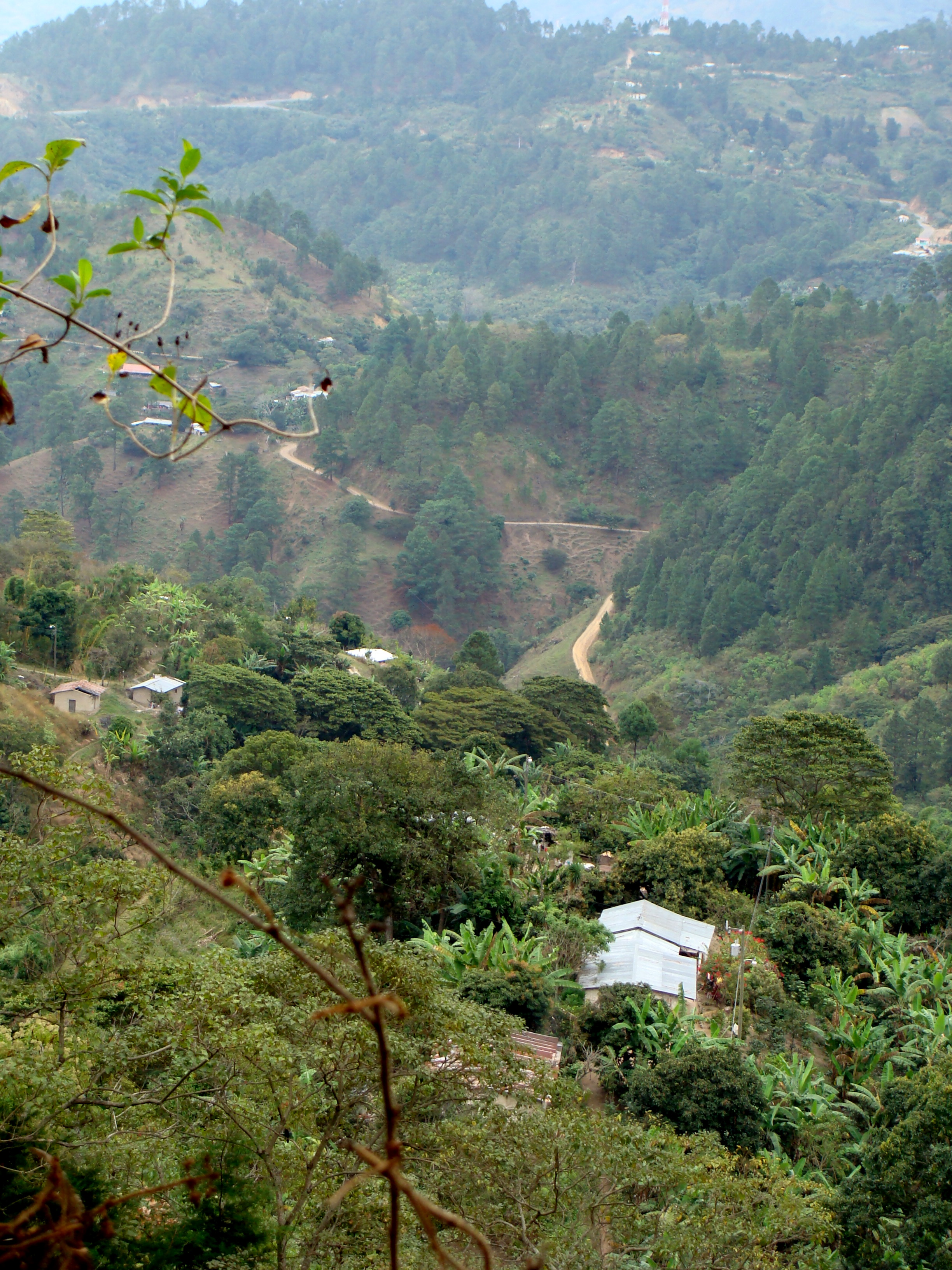
We woke up rather late on Wednesday morning (6:00am) and decided we did have enough energy to take on the 40 mile tough ride from Estelí to Jinotega, all on dirt. We saw maybe 10 to 20 vehicles on the remote Nicaragua back road which were mostly buses serving the local communities, The landscape was mostly dry desert and rolling hills; other areas along the way were highly productive river valleys were tobacco, onions, cabbage, potatoes where being harvested.
We stopped at a small tienda in the middle of the trip to purchase a cold drink. There we meet many local residents including Sarah, a Peace Corps volunteer, who lives in a rented brick house across from the store. We knocked on her door to say hello and a small petite dark haired, young 20ish female came out and greeted us. She was the famous local gringa. We spent sometime with Sarita learning about her life in the middle of rural Nicaragua as a Peace Corp volunteer.
The house Sarah lives in is owned by a young man who has left to work in the United States so she rents it from his family. The house has electricity which was installed in the area a year ago by the government of Nicaragua. She does not have running water but gets water from the neighbor´s hand operated water pump. She washes her clothes river nearby. Since Sarah does not have a refrigerator she stores perishables in the neighbors refrigerator, the rich ones in the neighborhood. read more here... lee mas aquí... »
Impressions of Nicaragua
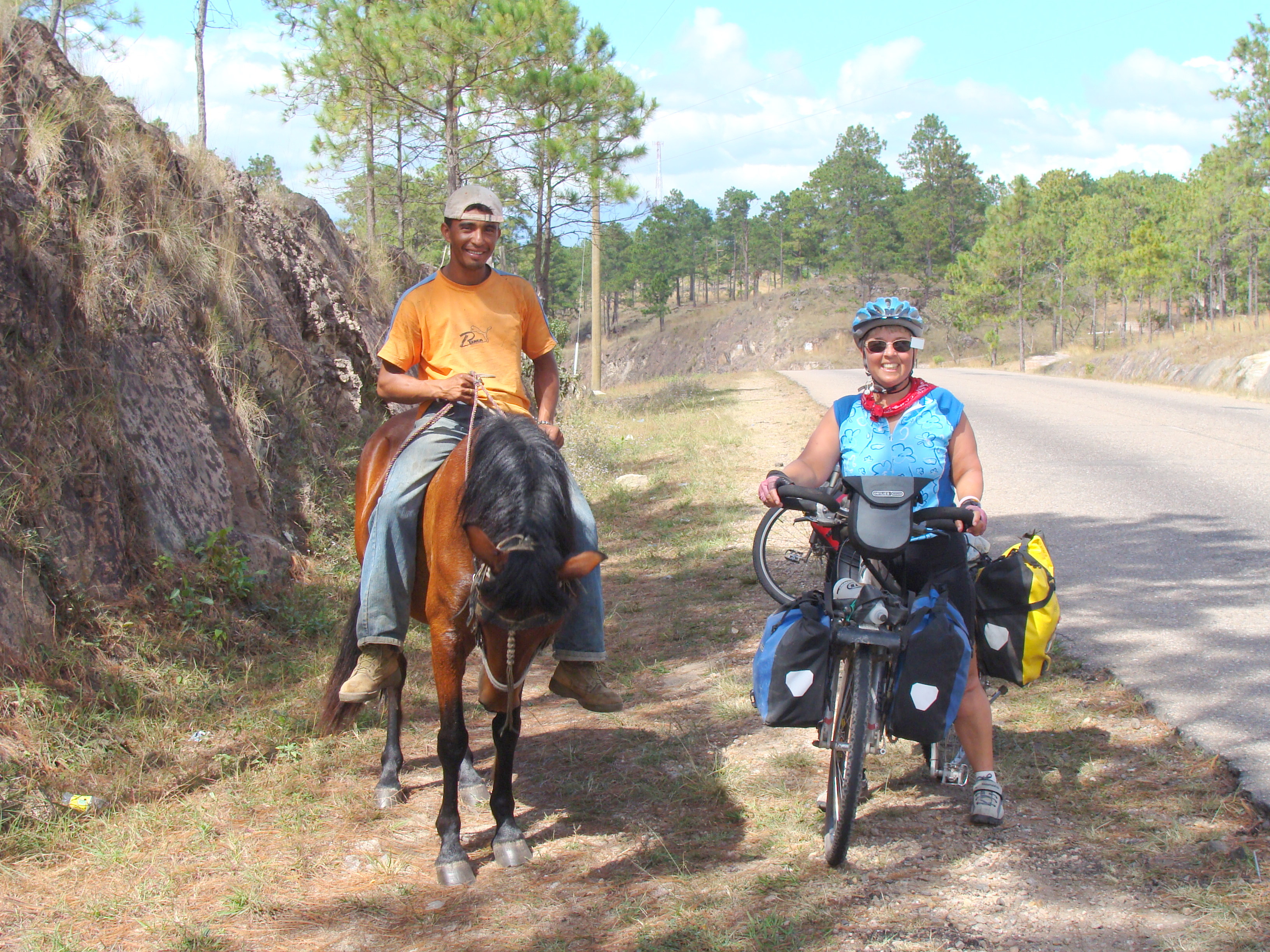
What a delightful surprise Nicaragua has been to ride in. From the moment we crossed the border from Honduras into Nicaragua, biking through a country which is the poorest in Central America has been a great experience. Yes we see some very sad sights, houses made of mostly discarded scraps of plastic, lumber, tin and natural products, children without shoes, communities with no electricity, shared wells and old people begging for money. But mostly we find a land with a many different aspects.
We ride up through dry mountain regions on remote dirt roads and everyone tells us we will have no troubles, that we´ll have no security problems because we are outside the urban areas. What we have found is whole communities come out to see the Gringos on bikes riding through their neighborhood, children yelling out hello, good afternoon or by practicing the few words of English they know. Many children near the border would ask for money, the only word they knew. Randy gave a few of the children in Honduras a lecture about asking for money and how it was impolite not to say hello as a friend, but none of the children in Nicaragua have been like that. We learn a lot as we ride through the different parts of Central America.
Some of the steep mountain areas cause us to rest more and to walk our bikes up the steep grades. We have had a chance to walk with more people or ride along a campesino on a horse. read more here... lee mas aquí... »
Crossed into Nicaragua today
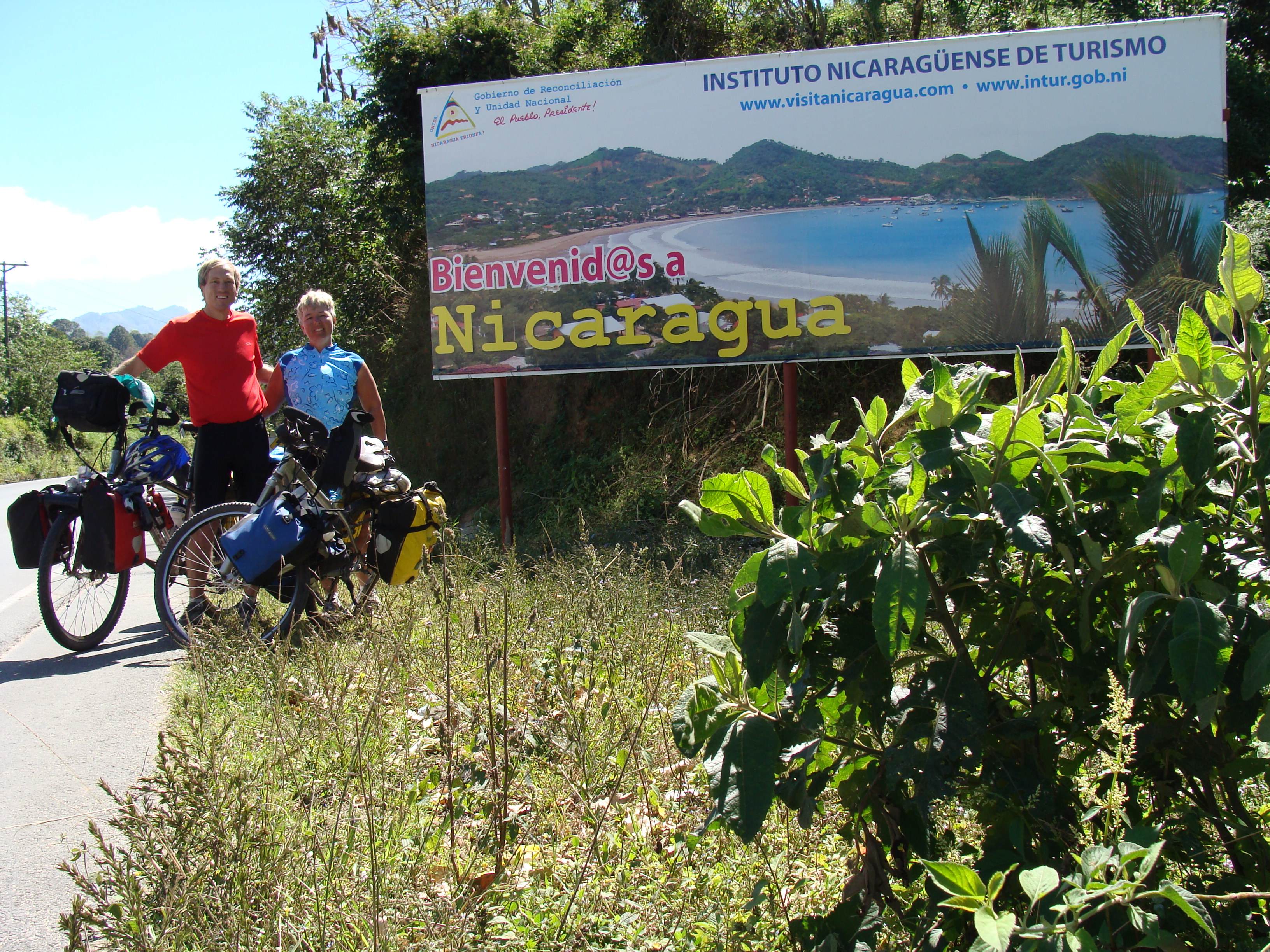
We crossed into Nicaragua today - our 6th country on the trip. We had no problems at all, and all the officials were very friendly. Once again, we even got a fair rate of exchange from the moneychanger. We now have Nicaraguan Córdobas, which about about 18 to the dollar, instead of Honduran Lempiras, which are about 19 to the dollar.
Route through Honduras

You may remember our friend Tim Malloch that we met in the north of Mexico, in the Copper Canyon region. He was headed north, and we south, and like all travelers we meet, we pestered him with lots of questions about his route and his favorite places along it. We remembered him telling us that the back roads from Santa Rosa de Copan to La Esperanza were his favorite section in all of Central America. So we set out to follow his route. We suspected, but didn't know, that it would continue the really tough mountainous route that we'd already been struggling with in Guatemala. But we took it, and he was right, it was delightful. We spent several days with nearly no traffic, delightful pine-covered hills, and interesting people tucked back in remote valleys. We passed by little roof-tile making operations (apparently the clay is good in this area) and climbed through some of the most remote areas we've been in since northern Mexico. In one town we found no available hotel or "hospedaje" (cheap hospitality) but the mayor happily opened up the municipal offices and settled us in the community meeting room. We had all the comforts of life including a bathroom and a cold shower (which was one of the lesser cold showers we've had). read more here... lee mas aquí... »
