
Banking in Honduras
People often ask us how we get money for our daily travels. For the last year and one half we have been able to get money from an ATM using a debit card. While there is not one in every town through out Central America we have been able to plan ahead and get enough money for a week or two or more of travel. Sometimes I feel awkward because I can just go into one of the ATM booths, bypassing the long lines waiting to go into the bank. I just go into one of the private booths, slip my plastic card into a machine and get a couple hundred dollars worth if the local currency.
This is how we have been able get our money until we reached. Gracias, Honduras. We miscalculated our available Lempiras, the Honduran currency, partly due to a hotel clerk in Copan Ruinas going through our bags as we explored the area and removing a few things from our bag including our stashed reserve. We we did not notice the cash being gone until we got low on money. So of course we go looking for an ATM which turned out to be non-existent in the town of Gracias. I went to all three banks to see if I could use my debit card as a Visa and with draw money. It turned out I could at one bank but the system was down and I needed to come back two hours later. I was curious to see I could use my debit card at another bank and since I had a couple of hours to wait anyway I gave it a shot.
What I found at the other bank which is true of all the banks is there is always one or two uniformed guards standing at the entrance with guns that look like sawed-off shotguns. read more here... lee mas aquí... »
Copan Ruins in Honduras
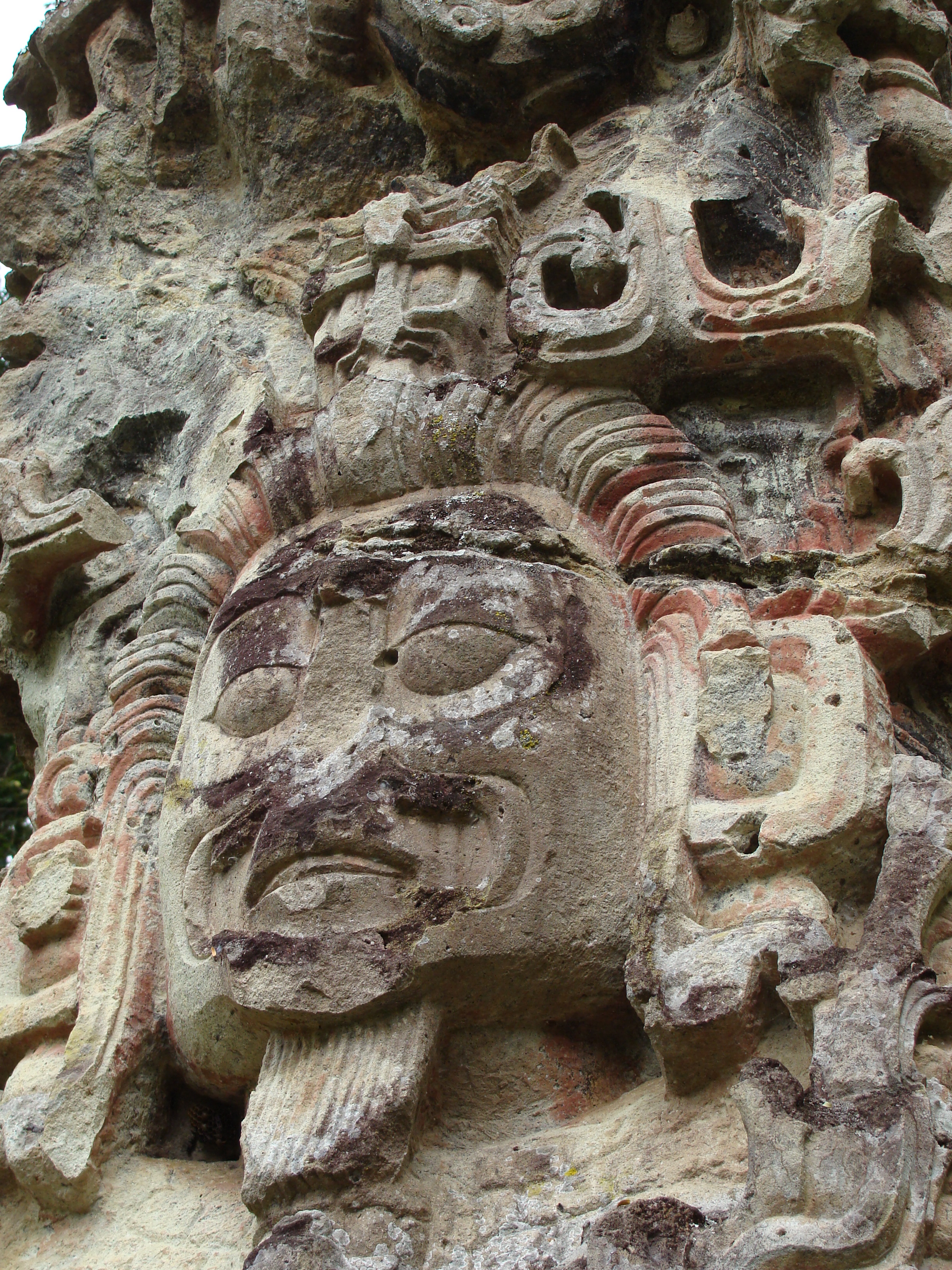
Our first stop in Honduras (and one of the reasons we chose the route we did) was the famous Mayan ruins of Copan. We dragged in at the end of another 3-day stretch of riding these mountains (about the best we've been able to do before resting at least a day). Nancy was sick with some kind of stomach thing and we were both finishing off colds. (All of these ailments are long gone now, thankfully.)
So we weren't at our best the next morning when we went to the ruins. We spent the entire morning there, and hired an English-language guide to explain it all. But we were all the time just feeling like we wanted to be in bed or getting something to eat, which is not what you want when you're at one of the world's most famous and important archaeological sites.
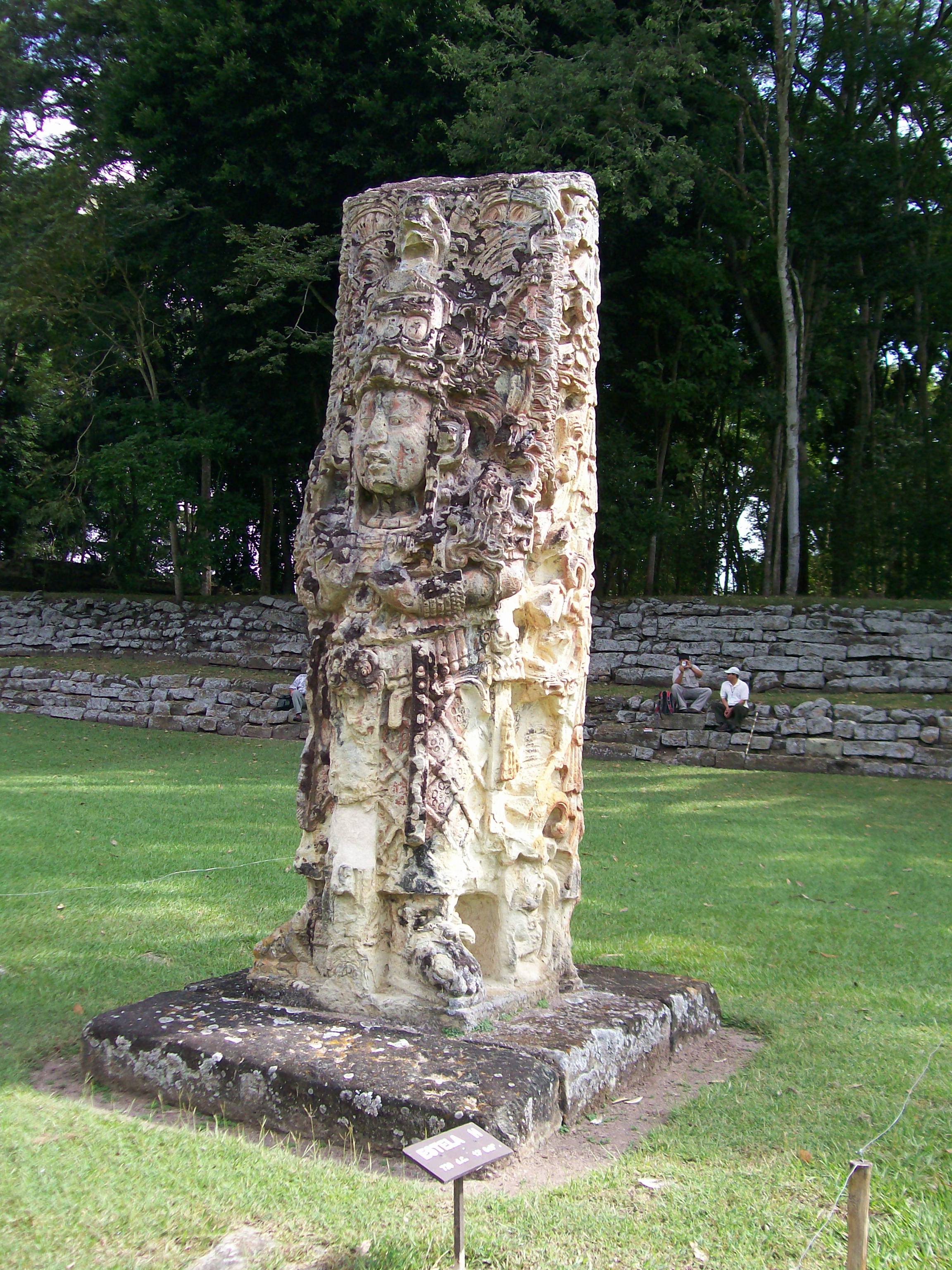
Despite our sorry state, we really appreciated the artistic beauty of the place. We've been to several other Meso-American ruins, and the beauty of the stelae (tall stones that tell a story) and other engravings was just off the chart. Somehow they really developed a much more artistic way of doing all the hieroglyphic writing here.
The environs are beautiful green luxuriant growth, like at Palenque, but the structures are considerably smaller.
Probably the most significant thing we've taken away from Copan was the enormous connectedness of the ancient Mesoamerican world. read more here... lee mas aquí... »
La Tigra National Park Cloud Forest
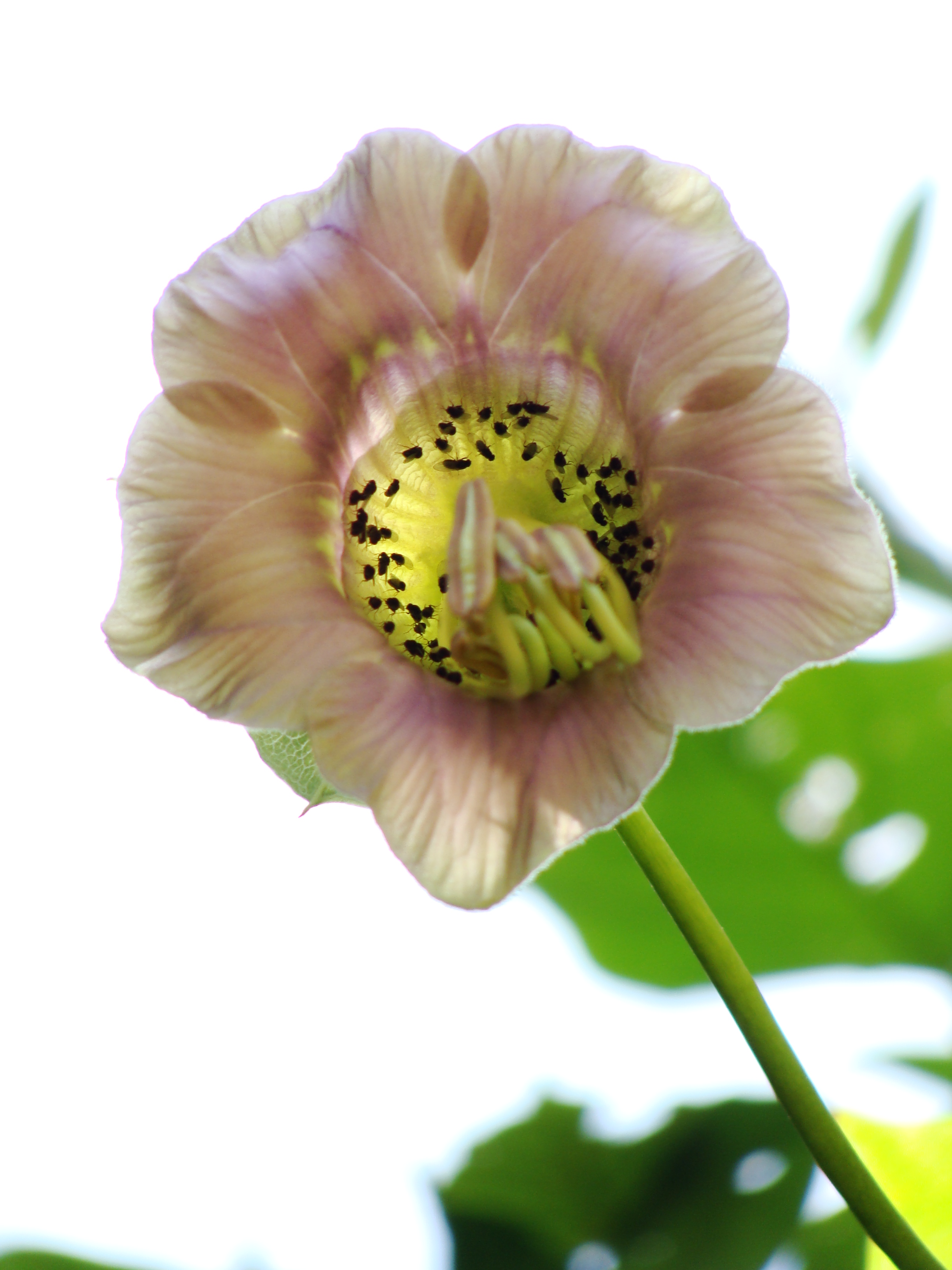
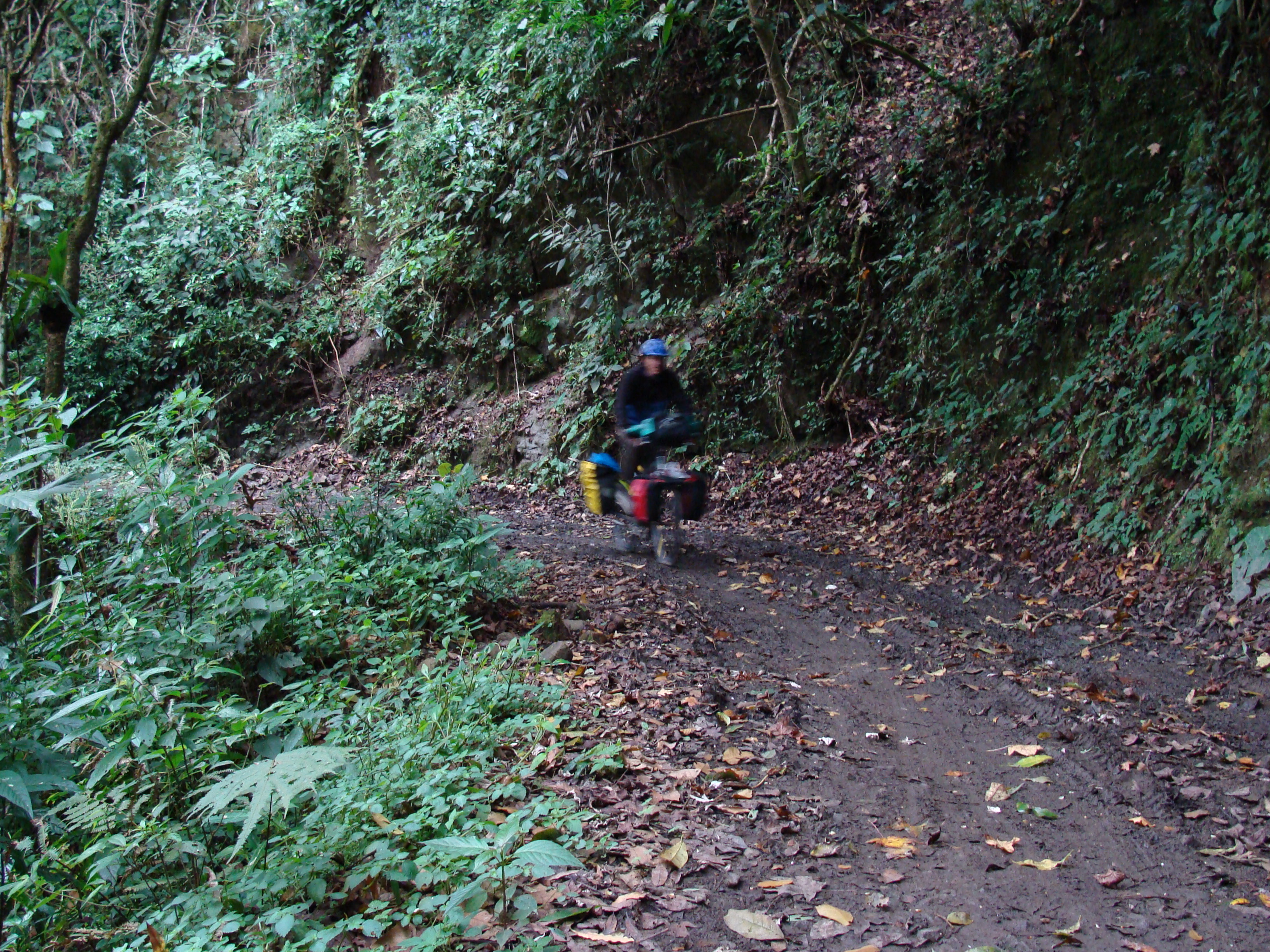
In Central America there is still some remaining cloud forest. In Honduras we had a chance to visit Parque Nacional ¨La Tigra¨ for a couple of days. We took a 3 hour hike up into the high mountains. We walked along the flower lined path up further into the heavens and into the misty rain forest. The thickness of the clouds increased with each meter we climbed. The visibility dropped down to nearly nothing and the silence of the jungle like mountain forest became louder. Up at 1800 meters there are pine trees, flowering hard wood trees, mosses engulf everything. The parasitic bromeliads grow in the branches and grow with vengeance. We climbed to the 100 meter waterfall before calling it quits. We could have climbed another 6 hours but that day was suppose to be a rest day. It was wonderful having the whole rainforest to ourselves, we did not see another person hiking the old mining trails of ¨La Tigra National Park¨.
What was amazing is that we where only 15 Kilometers from Tugucigalpa, the capital of Honduras. It was just over the ridge another couple of thousand meters higher and then down a couple thousand more. read more here... lee mas aquí... »
Podcast: Interview with Scot Domergue, our riding buddy in Guatemala

After corresponding on the internet for quite some time, we finally got to meet. Scot had ridden down to Guatemala from his start in Zihuatenejo, Mexico, and was studying Spanish in Quetzaltenango. He rode over to Antigua to meet us and we rode together for several delightful days before Scot had to return to get ready for his flight back to the U.S.
One thing we wanted to have Scot talk about and forgot: Look at how light his load is. He's carrying less than half of what we carry, and still has a tent and sleeping bag (but no stove or cooking utensils). We're tremendously impressed and inspired and sure would like to learn from him. Stay tuned!
16:09 minutes (5.94 MB)
Coffee Harvest
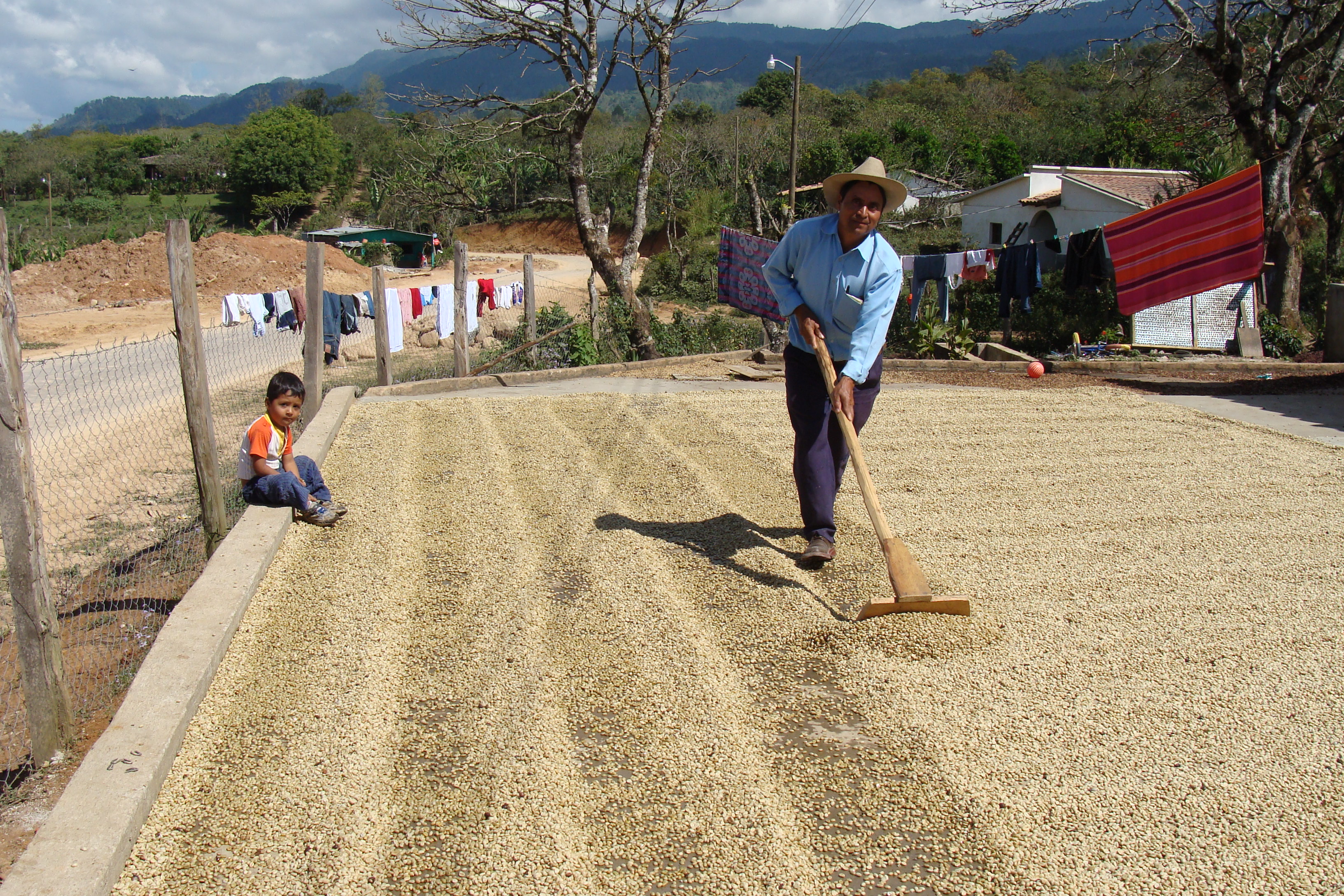
The areas we've been riding through on Guatemala and Honduras are all full-bore into the coffee harvest. Coffee is everywhere, and it's really interesting to see where that brew comes from.
On the picking side, we've met little kids with mayonaise jars and whole families, each with a home-made bucket. They work as hired hands, getting paid about 1 lempira, or 2 cents per pound of picked coffee. A family can pick a fair bit in a day - maybe each of the kids can pick 40 pounds, bringing in US$2.00. This time of the harvest can be the primary cash earning time of many of these campesino families.
We met Carlos, on the complete upper end of the coffee spectrum, at a hot spring in Gracias, Lempira, Honduras. He is a coffee taster, employed by the Guatemalan national coffee testing laboratory, and he helped us understand some of the details about the harvest. He mentioned that US people have a tendency to disapprove of small children being involved in the coffe harvest, but here it's a longstanding tradition, and beneficial to the families. Carlos also explained what makes coffee good (bigger beans, shade grown, mountains, etc.) and what the various grades of coffee are, and how world price fluctuations affect this region (a lot!)The coffee bean off the bush is a largish green thing, which has to have the outer fleshy part ripped off with a machine to leave the inner bean. This step of the harvest is invariably done with a machine. Then the coffee is left out in the sun for three days to dry. read more here... lee mas aquí... »
Entering Honduras, our 5th country!
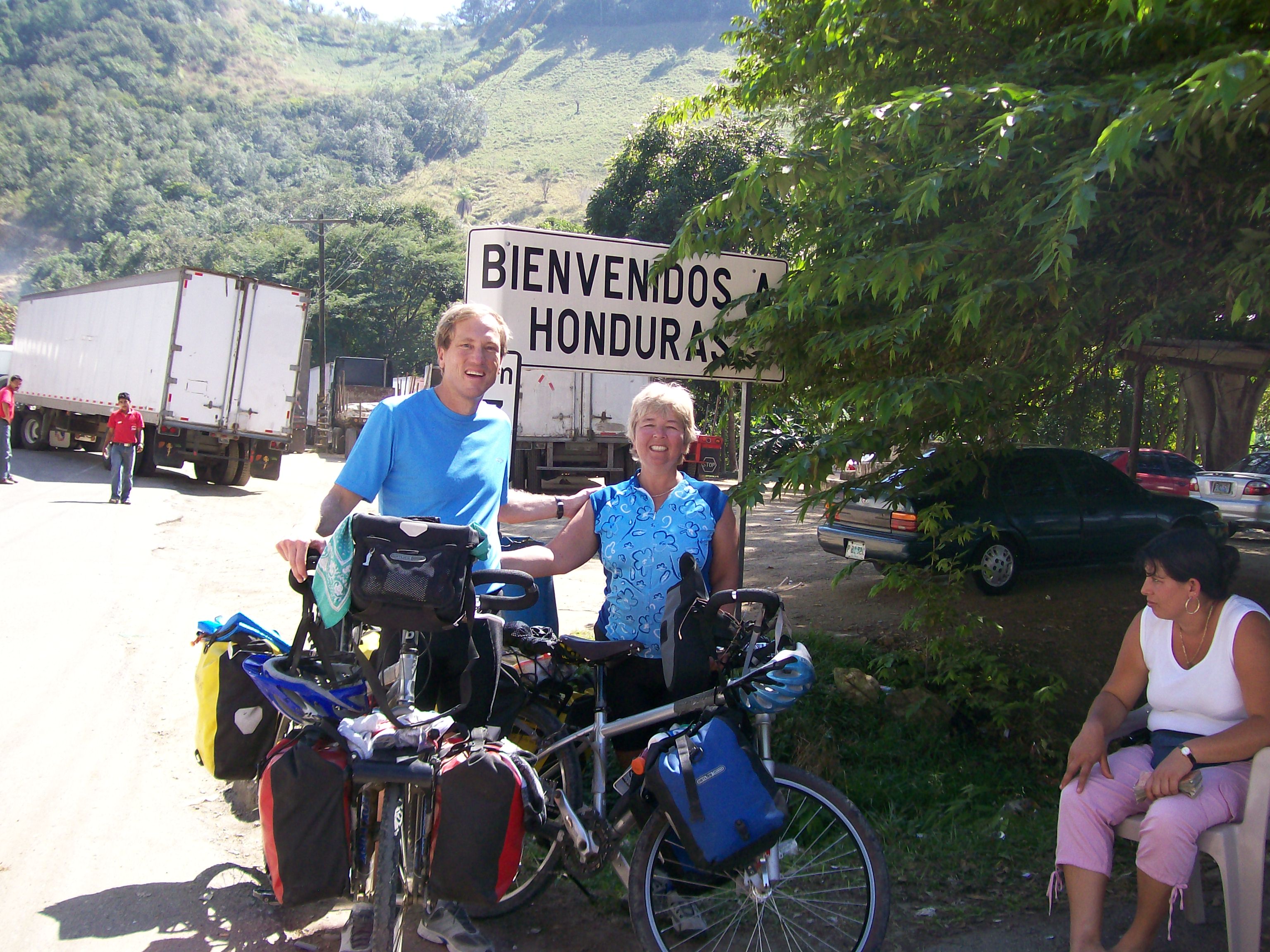
There are new pictures posted and the route information is up-to-date so you can see our route through Guatemala.
We finally entered the 5th country on our trip, and once again we're sad to leave a delightful place. Guatemala was great to us, if we don't blame it for the whooping cough :-)
We had to pay $1.30 to leave Guatemala and $3 to enter Honduras, but there were no problems of any kind. We even got the exchange rate we asked for when changing our Guatemalan Quetzales into Honduran Lempiras. Lots of friendly talk with everyone around. The border post where we crossed is a bit of a backwater, which helps, I'm sure, but the people sure were good to us. read more here... lee mas aquí... »
Climbing the Pacaya Volcano
Views from Pacaya Volcano
One of the delightful touristy things you can do in Antigua Guatemala (the beautiful gringo touristy old colonial city just a few minutes from Guatemala City) is you can climb the Pacaya Volcano and see the lava flow there. For $5-$10 you get a bus ride to the trailhead (about 2 hours away by slow bus) and a guided hike up to the lava flow at dusk. What a treat it is! I've never seen a lava flow before, so this was great. We climbed up a steepish trail for perhaps 45 minutes before getting to the cold lava flow we had to cross to where the actual river of lava was flowing. Then we had to slow down considerably and pick our way across the rough black lava. But when we got to the actual lava flow, it was just at dusk, and it glowed terrifically, and it was so much fun to see it squeeze and fill and move around and flow into little lakes.
When I did the exact same thing in 1994 with my young kids, it was a completely different mountain. Then you had to climb up a steep, steep cindercone to get near the crater, where eruptions regularly dropped rocks just a few feet in front of you. A completely different kind of volcano.
You can click on the triangle in the video to view it. read more here... lee mas aquí... »
Daily Life Back On The Road
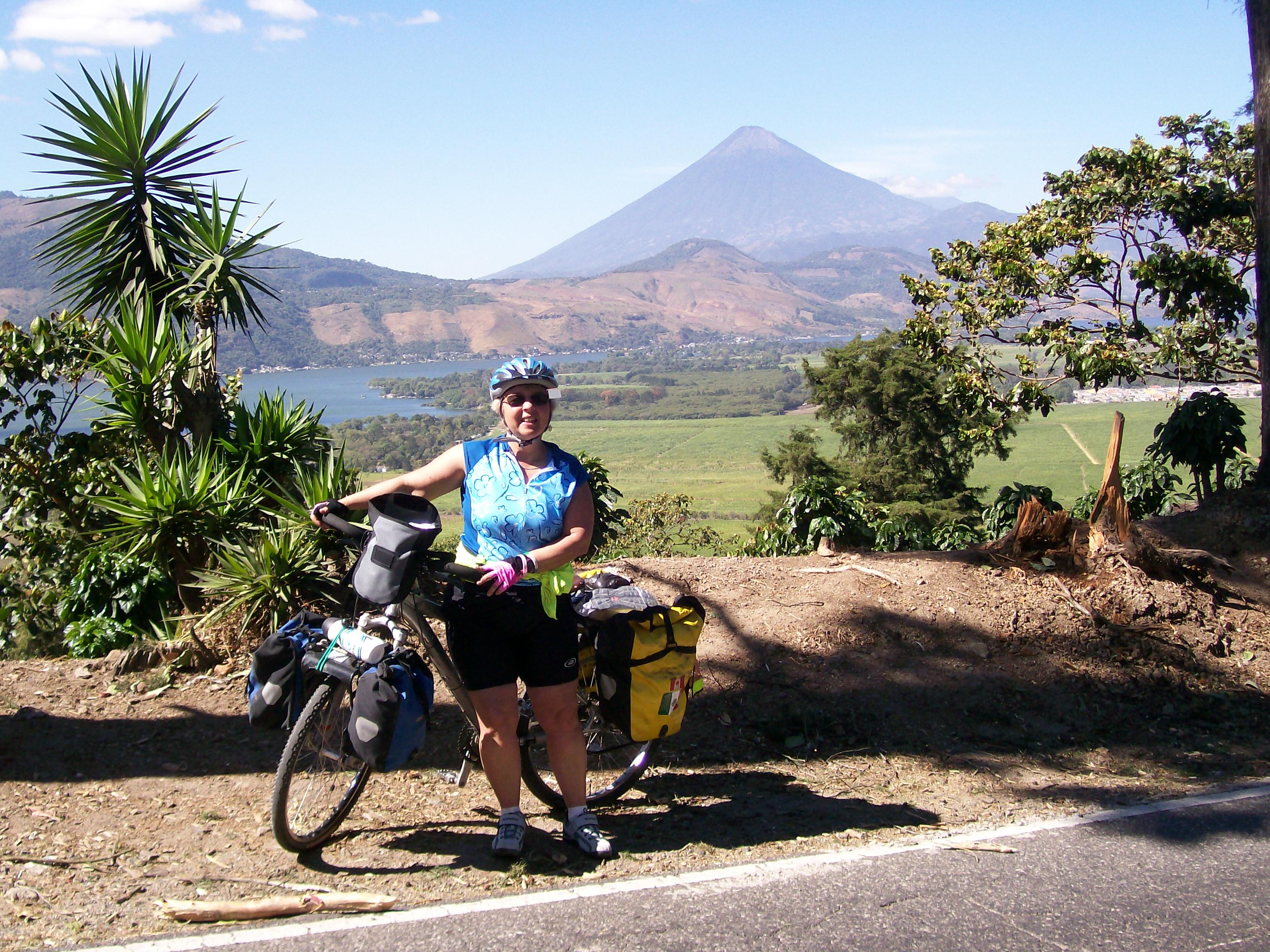
We are getting into the groove of riding our bicycles down to the bottom of South America. After 4 months of living in the United States we have giving up that and live the life of Hobobikers. What does this mean?
It means staying in a different place every night. a hotel, a flop house, someone’s house, a backyard, or camping somewhere in a town that someone has claimed is safe. Currently we are staying in hotels, with anywhere from a small twin bed to three various-sized beds. Some have running water all day long and produce warm water through an electrical device attached to the shower head. This is called a suicide shower. Never raise your hand up while washing the armpits and touch the electric device. You will get a shock. Others have water only part of the day because of water shortages in the region.
At the end of the days riding we wash that day’s biking clothes in the sink or shower or perhaps a concrete basin for washing clothes called a pila. We have a stretch clothesline for drying our closes. All the shower floors in Central America are about 8 inches taller then the surrounding floor so when I step out of the shower with wet feet onto the tiled ceramic floors, I always feel like I will slip. I use a red bandana as a rug which I wash in the morning and hang it on the bike to dry during the day.
Dinners are usually some kind of grilled meat or chicken dish with rice and some other side dish. Actually this is also for lunch and also for breakfast. read more here... lee mas aquí... »
