
Nicaragua Tidbits
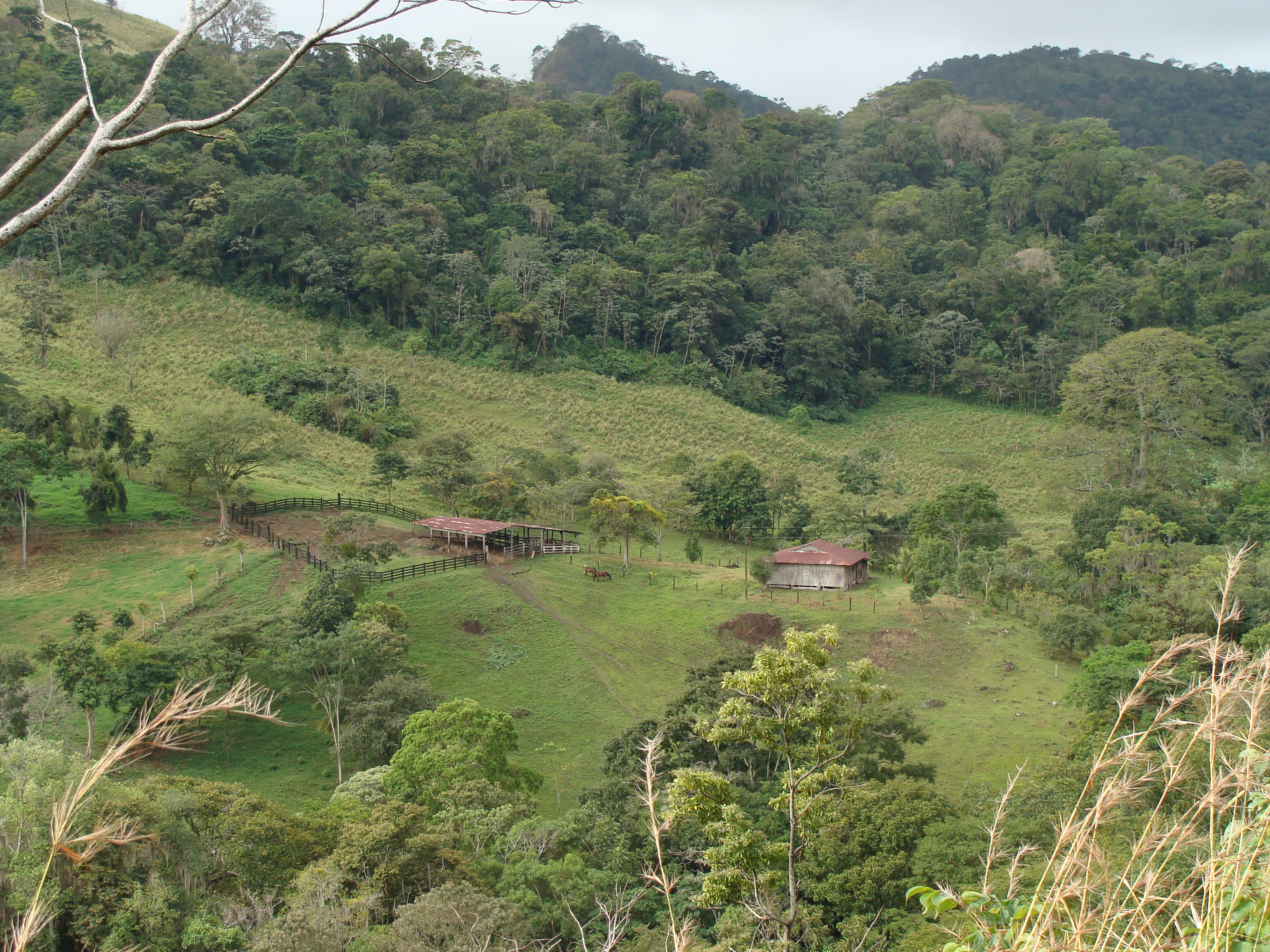
We found Nicaragua to be a delightful country. Despite the fact that all any of us remember about it is the war in the 80s and the US involvement in it, Nicaragua is a tranquil, safe, and friendly place. We didn't have to pretend that we weren't Americans... We were received with great friendliness everywhere we went. We found no vestiges of the 1980's socialist agenda, and museums were the only obvious physical relics of the wars.
We had heard various things about safety in Nicaragua, but what we found was a country where nobody seems worried about crime at all (except in Managua, which we didn't visit). Nicaragua is reputedly the safest country in Central America, possi bly including Costa Rica in that tally. Sometimes in Guatemala and Honduras when we would ask about a particular back road we would be warned off: "not enough people there, not enough police, dangerous", in Nicaragua we'd ask and they'd say "oh, yeah, that's great, no problems with delinquency here".
All this and Nicaragua is the most resource-poor country in Latin America, with a per-capita average income for the whole country of just $700 or so. We saw some pretty simple shacks, and there are far more outhouses in rural Nicaragua than there are flush toilets. There may not be any flush toilets in rural Nicaragua. read more here... lee mas aquí... »
APLV: Visits to actual communities getting water projects

We visited three impressive communities getting drinkable water in the Rio Blanco area. One was just in the preparation and funding stages, one was partly done, and the third was complete and beautiful, with a very remote community having clean, healthy drinking water 24 hours per day. I'll start with the one that was finished and work back to the one that was just about to get started.
Okawas
We had the delight of visiting the community of Okawás for the official ribbon cutting and handover ceremony for the new system. We got in a truck at 5;30 in the morning and drove for a couple of hours to a river crossing beyond which there was no road, crossed the river in a long motorized canoe, and then got on mules for the hour-long ride to the village. The trail started out pretty easy, but turned into some pretty impressive muddy and rocky ups and downs. With our little experience with horses we were a little nervous about how they were going to navigate the difficult terrain, but they did better than we would have. read more here... lee mas aquí... »
The Island of Ometepe, our last hurrah in Nicaragua

After riding back south from Rio Blanco in Nicaragua we spent one night at the tourist town of Granada, the port town at the north of Nicaragua. It's all full of tourists from all over the world, an easy gringo destination with a nice climate and beach and lake and great gringo services. Made us a little crazy though. In the morning we got on the 3-times-per-week ferry out to the island of Ometepe, in the middle of the lake. It took four hours and we got in after dark, but the next morning we found a beautiful island with a pair of dramatic volcanoes. We spent 3 days exploring and waiting for the ferry that would take us all the way to the bottom of the lake where we crossed into Costa Rica. If you ever want an easy place to get away from it all and spend a week or so with a really easy lifestyle, Ometepe is the place. So laid back and beautiful. Cheap. Good tourist services. Lots of hikes and things, and you're in the middle of a huge lake so there's lots of beaches and beachfront hotels. A very nice place.
We crossed into Costa Rica today
APLV: The Potable Water Technical School

Agua Para La Vida is committed to truly sustainable solutions, and they have demonstrated it in the most significant way by actually starting a school for Potable Water Technicians.
The initial little tiny project that APLV did back in the 1980's, of course, was mostly done by brigades of volunteers coming down for a few weeks at a time. But when you do that, your project has little hope of being maintainable, because there is inadequate in-country expertise. To counter this, APLV started up the "Escuela Tecnica para Agua Potable", or Technical School for Potable Water back in the 1990's. It's a fully accredited 2+ year class involving every aspect of potable water design and development, including the theory and practice of planning and engineering the delivery systems and including everything else that APLV does with a project. Three classes have now graduated, and the fourth class (of 8 students) is about halfway through. For this class, 70 students from all over Nicaragua applied for the full-ride scholarship (including room, board, and tuition), and just the 8 slots were available. But what an education they get. They come out with all the mathematics and engineering to do technical work on water systems, and have a fully-accredited "Bachelor" degree, similar to an honors technical high school degree. Their presence in various organizations throughout Nicaragua means that projects don't have to spend money on high-priced consultants to do the work that these specialized technicians can do. APLV's "ETAP" school is the only school graduating water technicians in Nicaragua. read more here... lee mas aquí... »
APLV: Promoting Health and Sanitation

The organization we visited in Rio Blanco, Nicaragua, Agua Para La Vida, believes in an integrated approach to making a difference in a community. So they don't just drop a potable water system and disappear. They try to set up a program that will be self-sustaining and which can make a long-term difference in the health and welfare of the community. For that reason they always provide an outhouse (actually constructed by the family), and have a health team in charge of evaluating the community's needs, training them in appropriate health practices, and monitoring the water quality of the installed system.
Lilian Bando and Gregoria Espinoza have been working for APLV in their role as health promoters for a dozen years, and they still find that their educational role is the most important thing they do.
When they arrive at a new project, it's quite common to find that there are few or no outhouses (of course there are no sewage or water systems, so outhouses, where they exist, are the workhouses of sanitation in rural Central America). And it's also common to find that the entire community is ignorant of basic concepts like handwashing after going to the bathroom, proper management of drinking water, appropriate disposal of trash, and the like. read more here... lee mas aquí... »
APLV: Reforestation and Environmental Work

The second day we were in Rio Blanco at APLV in Rio Blanco Fadir Rojas, APLV's reforestation engineer, took us for a hike up into the beautiful Cerro Musún wilderness reserve right next to the town, where he used to work as an engineer and ranger. We spent the afternoon climbing up into virgin forest to a beautiful waterfall called Cascada Las Golondrinas (the swallows). As we walked along we chatted about his responsibilities with APLV and the growing importance of reforestation within the goals of the organization.
Fadir is from a purely campesino family in the dry, heavily populated western part of the country. His parents barely went to school - perhaps to the first grade - and can't really read, but they pushed education in their family and Fadir is one of four university graduates in his family. He succeeded in getting full scholarships for his university education at the national university and is now, at 27, one of the elite young leaders of Nicaragua.
When Fadir came to APLV he found that their vision of reforestation was too limited: They understood the idea of using forest management to project the water source from contamination, but the integrated management plan did not include enough emphasis on protecting the watershed itself from deforestation. read more here... lee mas aquí... »
Agua Para La Vida: The Community does all the work!
(We'll have pictures and updates to this article in a couple of days.)
When a community gets interested in a water project and approaches APLV, it has to go through a number of steps before the project can become a reality. One of the first steps is to commit to doing all of the unskilled labor and provide hospitality to the APLV technical staff when they are onsite. Although APLV provides the materials and engineering, the community does an extremely difficult job - each family normally commits to between 42 and 62 days of labor for the project. You can imagine what that means to people who have very little to take that much time out of the course of a project (6 months to a year). The families build their own outhouses, and the men do all the trenching and the concrete work. This is a pile of work, as the piping often runs for 6-9 miles (10-15 kilometers).
If you're interested in more information on Agua Para La Vida or would like to contribute, they have an excellent website at APLV.org where you can get the whole scoop or make a contribution. It takes just $30,000 to $60,000 to fund a complete village project that may benefit 100-200 families, complete with potable water, outhouses, community health training, and reforestation planning. It is even possible to fund an entire project (and then visit for the inauguration of the project), but of course most of us give in smaller chunks. read more here... lee mas aquí... »
