
Bike Tourist Podcast Interview
We were recently interviewed on the Bike Tourist Podcast and Gabriel said we could post the file here. Enjoy!
If you don't already subscribe to Gabriel's excellent podcast, sign up! biketourist.podomatic.com.
76:25 minutes (52.54 MB)
Women we visited in La Estancia de la Cruz
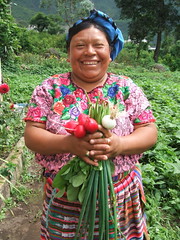
Berta in La Estancia
The women we visited Tuesday in La Estancia de la Cruz have been working in the fields all their lives and they know no other way to make a living. As young children they did not go to school because they needed to help the family in the fields. The land here is very rich because the volcanic soil and the 6 months of rain.
None of the women we met with today own their own land. They rent a plot and also work for someone else. With the help from Friendship Bridge, the women are able to rent a 40'x40' plot and grow their own flowers and vegetables. They have a chance to dream and maybe educate their children if there is enough money to buy shoes, paper, pencils and needed supplies. Currently some families do not send their children to school either because they need the help in the field or they just do not have the money to send the children to school.
The month of July is known as the hunger time because the food they had stocked piles are nearly depleted The growing season is February to August and they corn is not ready to harvest.
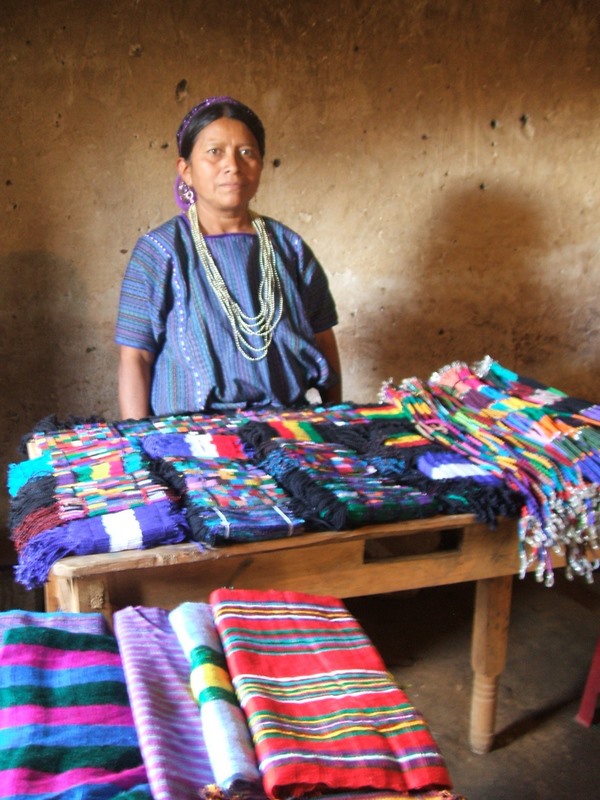
After interviewing the women, writing their individual stories and taking wonderful photographs of the women in their traditional colorful Mayan clothing, we got ready to leave. read more here... lee mas aquí... »
Women We've Met Recently
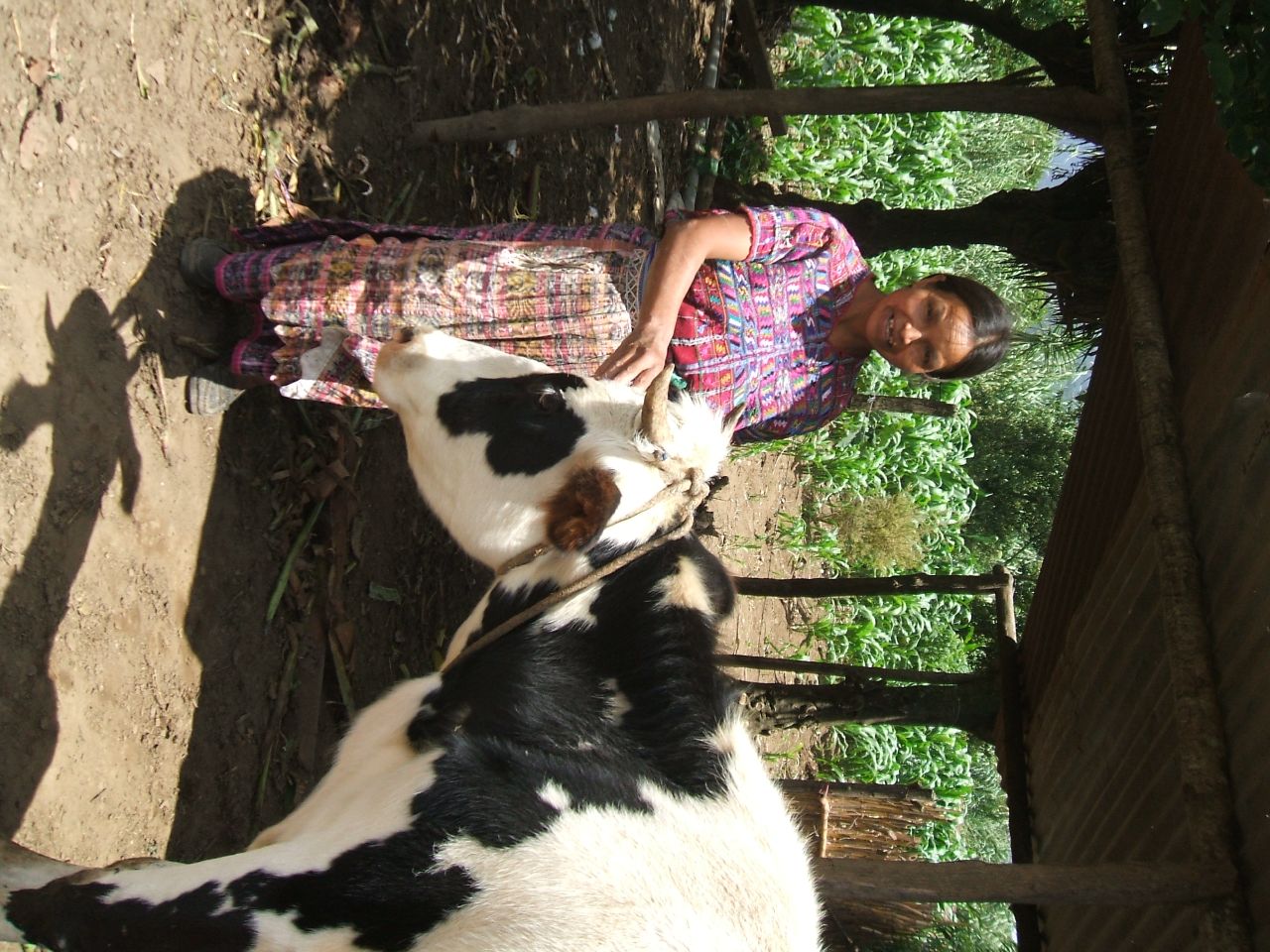
Last week Nancy met Clara Ajsoc in the highland village of Santa Clara La Laguna. Clara used her Friendship Bridge loan to buy a calf, which she raised, only to lose it to a sudden illness, leaving a young calf behind. But she bottlefed that one and raised it up successfully, and she now sells milk and cheese, where she had no livelihood before. And she wants to get another calf.
What is Microfinance Anyway?
The amazing man who won last year's (2006) Nobel Peace Prize pioneered the use of tiny loans without a requirement for collateral or security to poor people. Mohammed Yunus maintains with great success that if you just give poor people access to capital, they can make their own way in the world with their own businesses. His book, Banker to the Poor, is worth every minute of the time you take to read it - it's in every library and every bookstore and here on Amazon.com. It's the most hopeful book about poverty in the world that you will ever read. Yunus, with 25 years of experience in this, maintains that poor people pay off their loans at a much higher rate than the rich ones, and that simply providing capital in amounts like $100-$500 can transform the life of the poor by enabling them to start their own tiny businesses.
What we're doing in our daily work
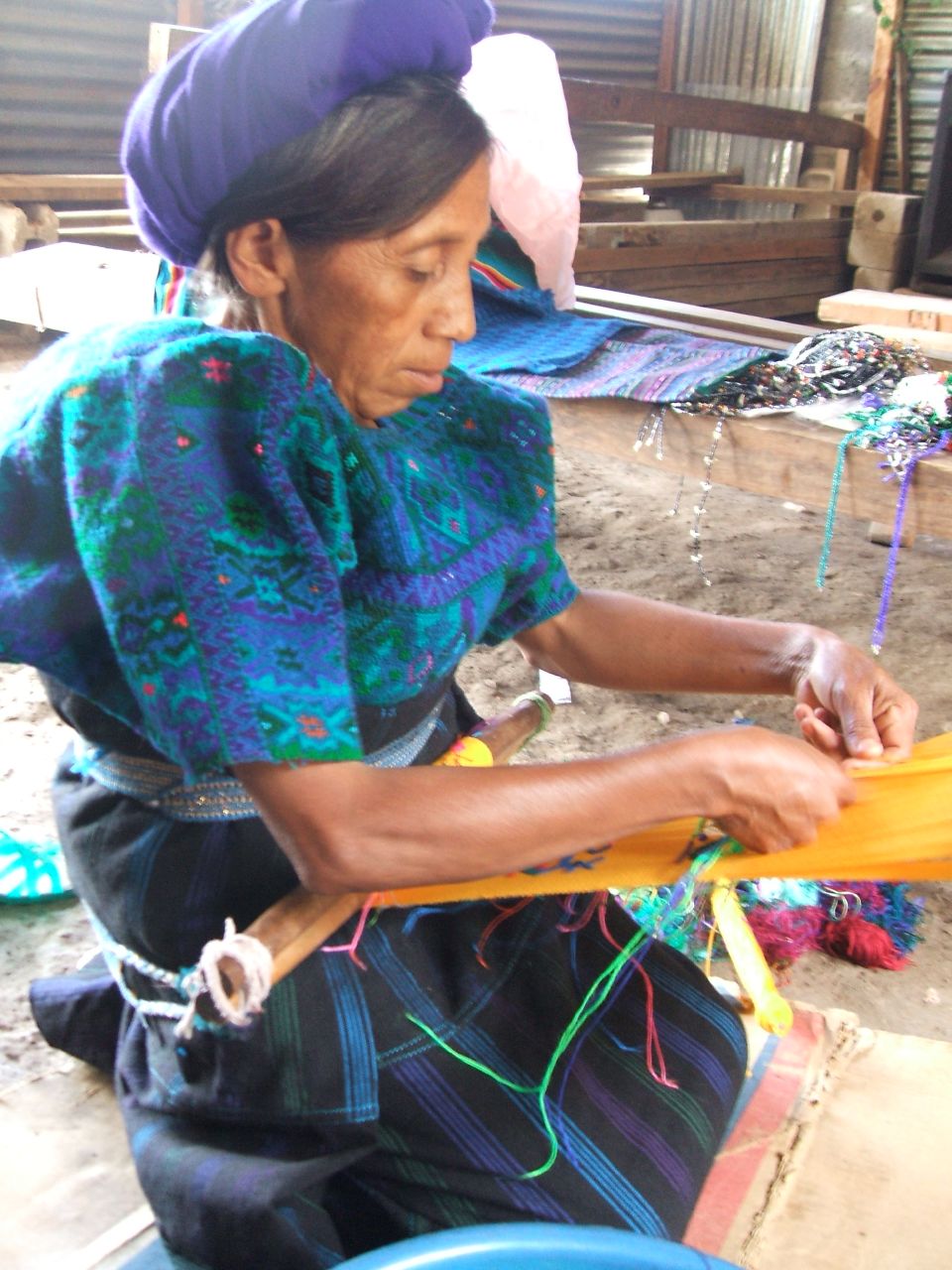
During the week, we go to a village every morning and meet with one of the women who are the workhorses of Friendship Bridge, the "facilitators". These are the women who form the credit groups and know all of FB's clients. The facilitator will take us to one of more of the clients' homes and may stay with us or may deliver us over to the women. We then sit down and chat with as many as six or seven families, one at a time, about their business, their life, and what they're doing with their loan.
The ride to Xela (Quetzaltenango)
Nancy's Second Day of Interviews
Patti (the Friendship facilitator) and I hopped into the taxi (really the back of a pickup). We snaked our way along the shore and up the side of a mountain -- the view was incredible. As I looked across the emerald lake toward the towering volcanoes, I wondered how such a beautiful place could house such incredible poverty.
All day I sat with the Mayan women in their homes, business and community center learning about their struggles, victories and dreams.
These people had been living in a war-torn area for twenty years only to be further pummeled by the incredible natural disaster Hurricane Stan in 2005. The torrential rains as a result of the hurricane washed away many communities. Whole neighborhoods no longer exist because of the mudslides that swallowed up the land the neighborhood sat on and with it thousands of people. It threw these people further into grave poverty.
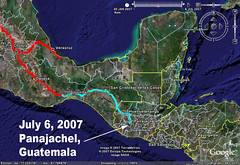
Where We Are - Early July 2007
In the past month we rode from the southern part of Oaxaca, Mexico along the Pacific coast for a few days, then up a huge climb into the mountains of Chiapas. Nancy liked the climate so much when we got up into the mountains that we stayed for two weeks and she studied Spanish. When we got going again, it was just a few days into Guatemala and then a glorious week or so exploring the green, mountainous western highlands of Guatemala.