
Volunteering for Kiva.org - A Major Change of Pace!
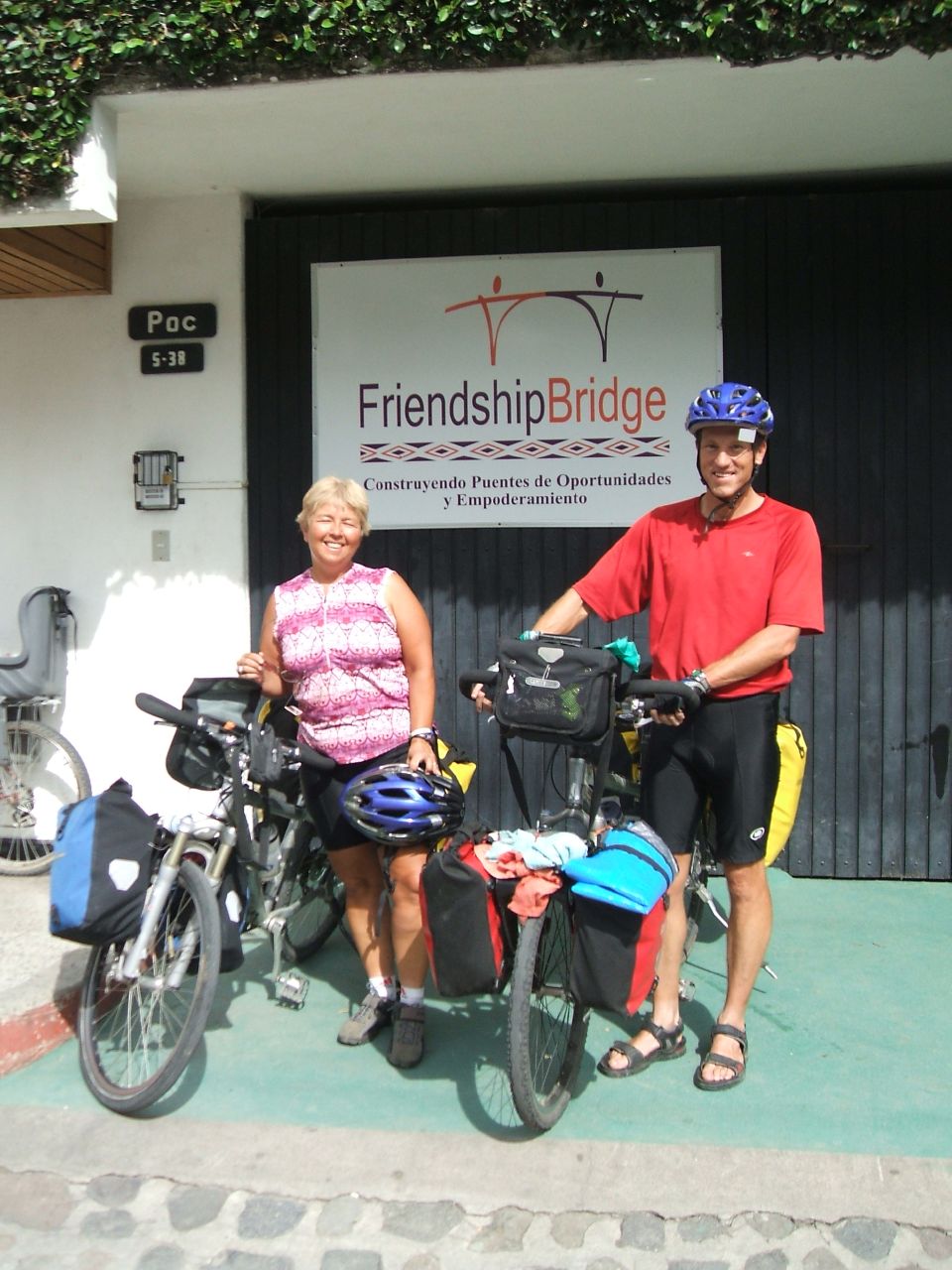
As we were riding through Mexico, we were really impacted by the poverty we saw, and became tremendously interested in the concept of microfinance, the practice of offering small loans ($100-$1000, usually), without requiring collateral, to tiny businesses. It turns out that last year's Nobel Peace Price winner, Mohammed Yunus, is the originator of the concept, and his book "Banker to the Poor" is tremendously inspiring. What they did with tiny, collateral-free loans in Bangladesh is the most hopeful story about alleviating poverty that I've ever heard in my life.
Riding the Guatemala Highlands
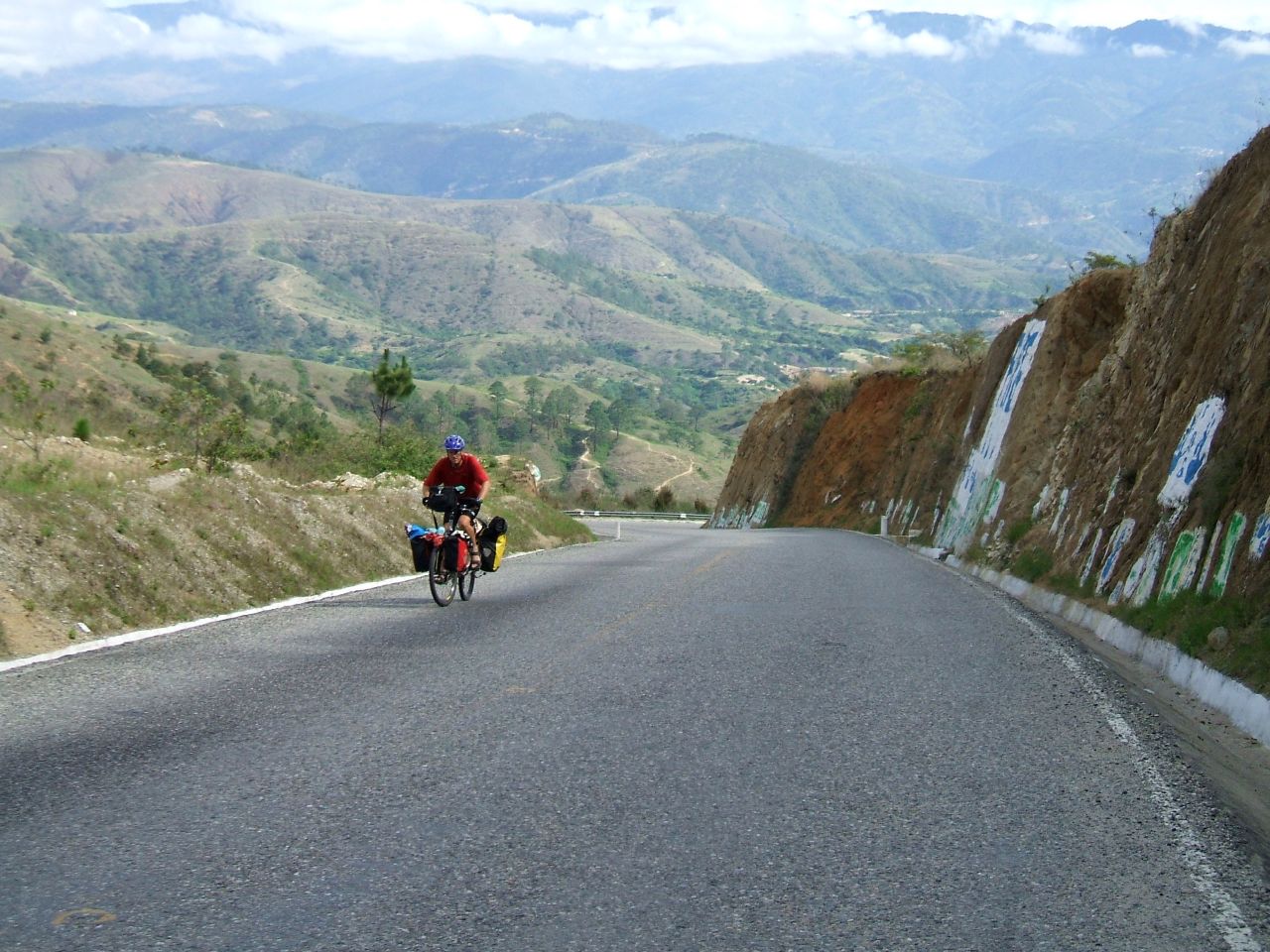
We didn't really know what we were getting into when we heard about the beautiful new road that runs east from Huehuetenango (Way-Way-tenango) - everybody said it had just opened and was a great new road. But it sounded like low traffic and a good road, so we took it. It was probably some of the best riding we've had on the trip. Almost no traffic, beautiful road surface, and sometimes even and shoulder!
It's all huge, brutal, beautiful green mountains. We've never seen so much green. The landscape looks like a quilt because of the efficient agricultural use of this land. In every village and along every road we meet colorful indigenous people who smile and say hi or call out to us, impressed by our trip. Often we hear someone yelling out "bye-bye" in English or the young children come running out of their house, waving and in unison cryout "Gringo Gringo". Nancy usually responds with Ninos! Ninos! (children, children) and gives a hearthy wave back.
In every village the people have a different "tipica" outfit, and the women's outfits are just absolutely gorgeous. I don't know what it would be like to live in a village where all the women wore the same dress every day, but the dresses they wear are beautiful. And each one tells a specific story; the women weave their own "huipiles", and it often requires three months of near-full-time effort to weave one. read more here... lee mas aquí... »
Leaving Mexico and entering Guatemala.
I had heard so many different stories about this country, I did not know what to expect. Would the border crossing be dangerous, with hordes of kids overwhelming us and perhaps slashing our pannier? Would the border immigration officials try to charge us horrendous fees? Would the money changers rip us off? As we rode the hot flat road toward the border, my stomach had a twisted knot and my head hurt. What would happen to us?
Guatemala!
We rode into Guatemala yesterday, after four and a half months and 2800 miles in our beloved Mexico. We had no border problems, no corrupt border officials, no cheating money changers, and not even any kids swarming around us asking for gifts.
Some things have changed - people seem even more friendly. Lots of people cry out "Gringo" or "Bye Bye", or just give us the thumbs up or honk at us. Today in a huge climb back up into the highlands we actually had a shoulder for many, many miles. Bananas have a different name in Guatemala, and we have to get used to Quetzals instead of Pesos. And the speed bumps are called tumulos instead of topes.
So far the riding has been absolutely beautiful, with green mountains soaring up on both sides of us. A bit too much traffic, but a little bit of shoulder makes up for some of that.
So far, so good! Our fourth country in the Americas.
Hobobiker Podcast #6 - Indigenous Healers in San Juan Chamula
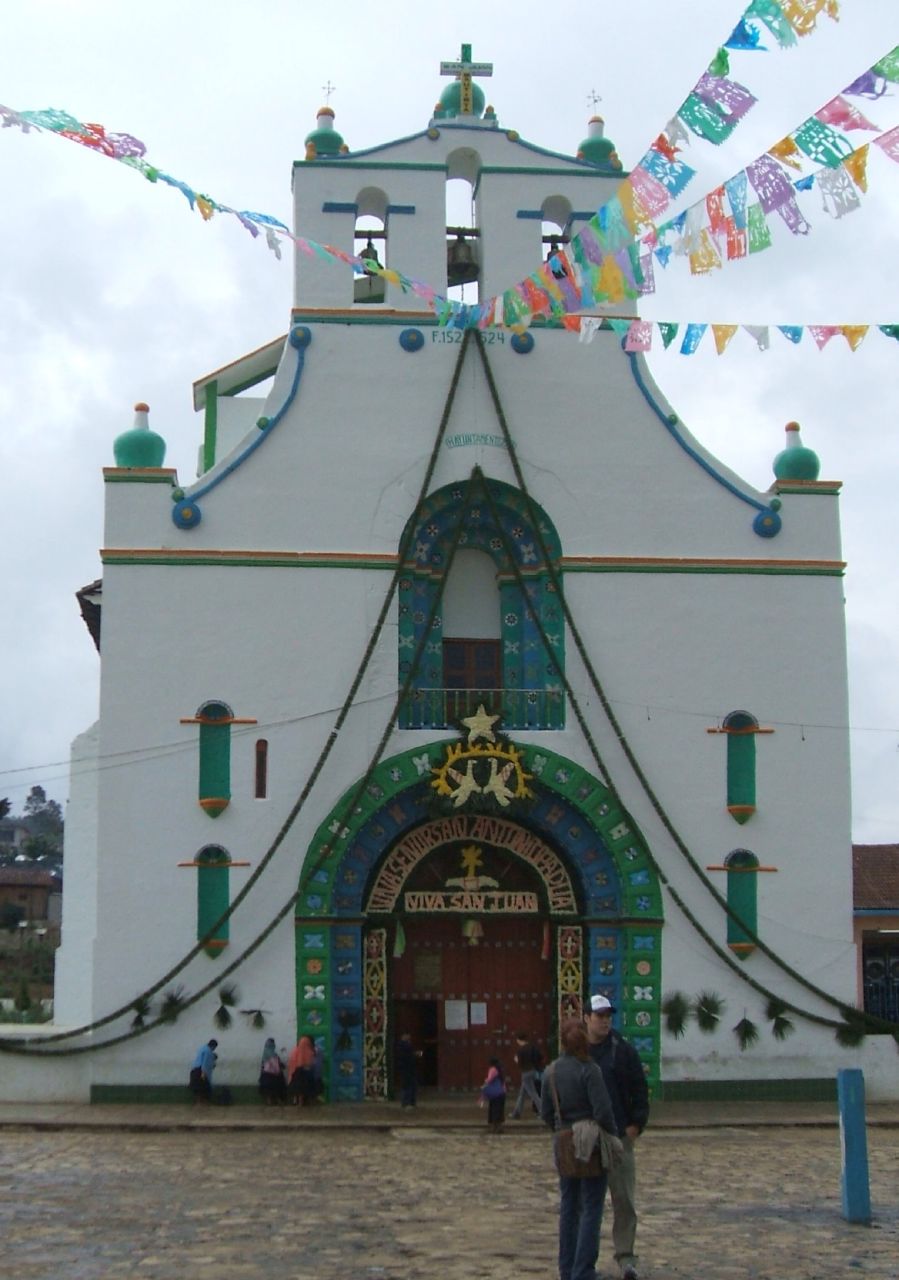
Here's the story of our visit to the Chiapas village of San Juan Chamula, where the church hasn't had a mass in 40 years, and it's used exclusively for the village's purposes. The main figure in the church is Saint John the Baptist, not Jesus, and the business inside is about indigenous healers, not about church services. The priests are allowed inside rarely, and only for baptisms.
We also bring you up to date on where we are and why we're not in Guatemala yet (We've been studying Spanish in the lovely city of San Cristóbal de las Casas, probably our last major stop in Mexico.)
17:19 minutes (15.86 MB)
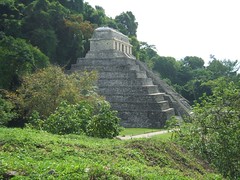
Palenque - Maybe the coolest ruin in the Americas
Narco-Traffickers in Mexico
Our entire experience of Mexico has been of a very tranquil country, with wonderful people. We haven't had to worry about our safety anywhere (except on the roads, of course, and you've already read about our safety situation on the road, or will below). It doesn't feel like we have to do much at all to keep our stuff safe, and we've had absolutely no issues with our personal safety; knock on wood.
That said, we also read the newspapers. And Mexico is in big trouble with its/our narco-trafficking problem (since the US is the primary consumer, it's a problem shared by both the US and Mexico). Big trouble. Even when you factor in that the media is fascinated with the subject and maybe they've overblown it, you still have daily assassinations of policemen, more than 1000 in the country so far this year. It seems that every day somewhere in the country a dismembered human head will be delivered to a police station with a "narcomessage" threat. Observers think that some parts of the police are clearly compromised by the drug traffickers. And reporters (print and media) are also being targeted at a rate almost as high as anywhere in the world. (Remember that all our information is coming from the newspapers. read more here... lee mas aquí... »
Mexican Earnings - Wages and Salaries
Every so often I ask people what wages they make in their work. Here are some examples:
- A Hammock weaver and salesman on the coast nets about $20/day on a good day when his wife is weaving and he's selling to motorists at a military checkpoint.
- Policemen make an average of $16/day nationwide, reaching up to $20 in some of the better-paying states, but going even lower than that in many places. It's quite a concern in the country because with salaries that low, it can be very cheap for a narco-trafficker to buy off a policeman.
- Taxi Drivers in Tuxtla Gutierrez, if they own their own taxi, can net $40-$50/day by working 12-16 hours.
- Teachers can make about $600/month, or $25/day and many have to work far from home and family, coming home a few times during a month.
We don't like to think about this, but when we go out to dinner and spend $10, or stay in an inexpensive (to us) hotel for $20, we're dropping more than most people's daily income just on that item. And, as we'll find farther south, Mexico is fairly well-off compared to much of Latin America.
